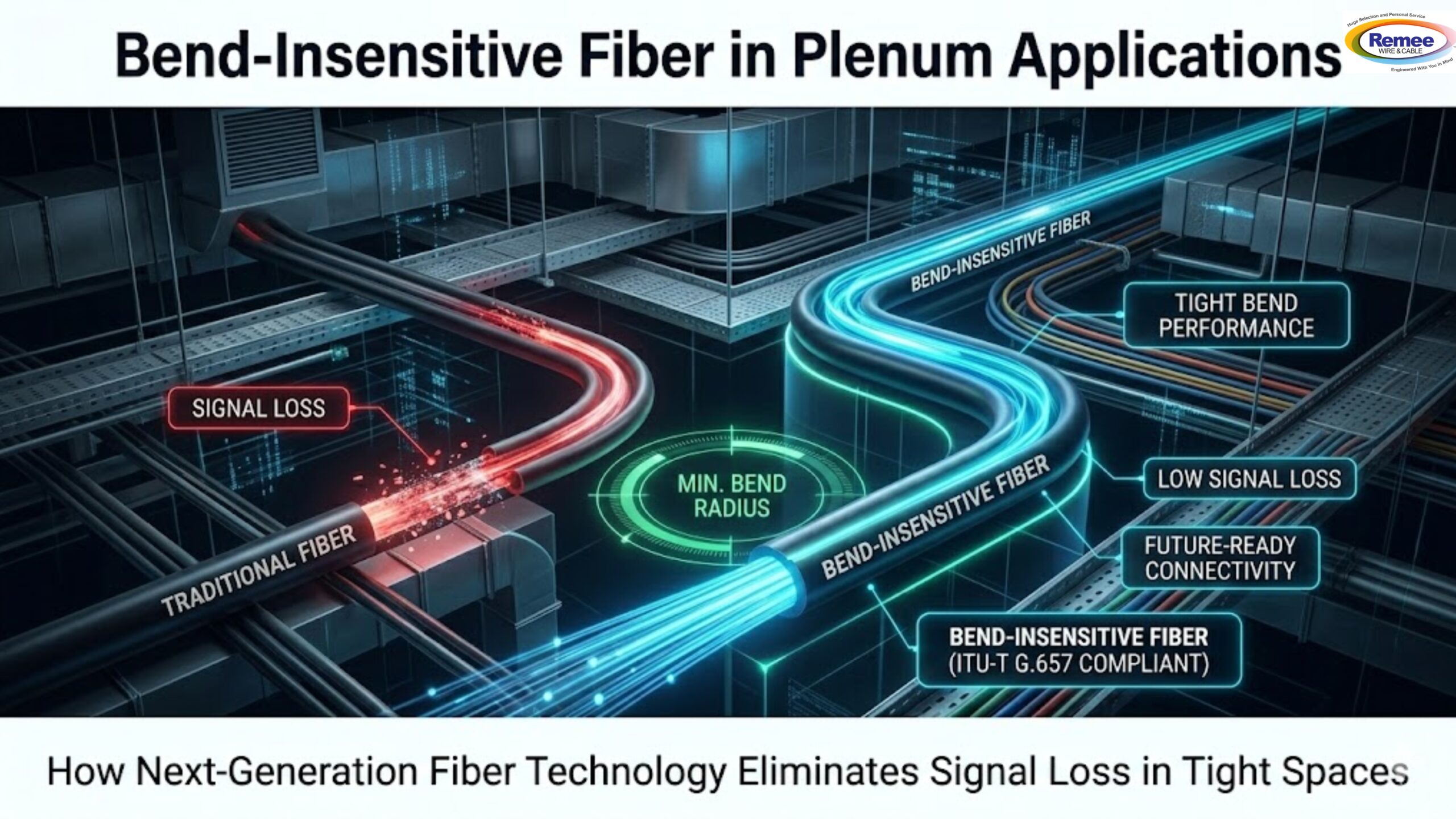
Bend-Insensitive Fiber in Plenum Applications: Why It’s a Game Changer
In modern building networks, especially in data-heavy environments like offices, hospitals, and campuses, cable performance inside ceilings and walls plays a critical role. One of the most important innovations in this space is the rise of plenum fiber optic cable, designed specifically for air-handling spaces where safety and performance both matter.
As network demands grow, traditional fiber systems often struggle with tight installation spaces, but bend-insensitive technology is changing that reality.
Discover how modern plenum solutions improve indoor network reliability.
Understanding Plenum Spaces and Their Challenges
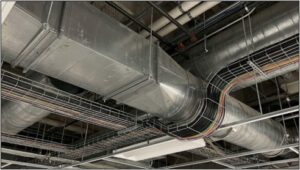
A plenum space refers to the open areas above ceilings or under raised floors used for air circulation. These zones are often crowded with electrical and communication wiring, making installation complex and constrained.
In such environments, a plenum fiber optic cable must not only meet fire safety standards but also perform under tight bends and sharp routing paths. This is where plenum fiber designed with advanced materials, becomes essential.
Key Challenges in Plenum Cable Environments
- Space constraints: Limited room due to dense HVAC and wiring systems
- Fire safety rules: Must meet strict plenum fire-resistance standards
- Tight bends: High risk of fiber stress in sharp routing paths
- Signal loss risk: Poor routing can reduce transmission quality
Rise of Bend-Insensitive Fiber Technology
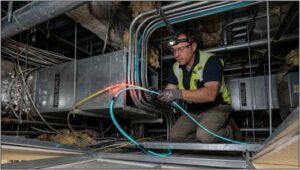
The biggest breakthrough comes from bend-insensitive fiber optic cable, engineered to maintain signal strength even when bent at very small radii. Traditional fiber suffers from signal loss when sharply curved, but bend-insensitive designs reduce micro-bending and macro-bending losses significantly. This ensures stable performance even in cramped ceiling plenums where installers have limited routing space.
Learn how bend-insensitive fiber improves high-density installations.
Importance of ITU-T G.657 Standards
At the core of this technology is the ITU-T G.657 standard, which defines specifications for bend-insensitive fibers used in modern communication systems. These standards classify fibers based on their ability to withstand tight bends without performance degradation.
In plenum environments, especially where cables must weave around ducts, lighting fixtures, and HVAC systems, ITU-T G.657 compliant fibers ensure that signal integrity remains intact even under extreme routing conditions. This makes bend-insensitive fiber an essential upgrade for future-ready infrastructure.
Tight-Bend Scenarios in Ceiling Plenums
One of the most challenging installation scenarios occurs in ceiling plenums of commercial buildings. These spaces are rarely designed with cable management in mind, yet they host a dense mix of utilities. Technicians often face tight-bend scenarios where conventional fiber would experience attenuation or even signal failure.
A plenum fiber optic cable built with bend-insensitive technology eliminates these risks by allowing sharper bends without compromising data transmission quality.
Upgrade your ceiling plenum installations with advanced fiber solutions.
Installation Flexibility and Cost Efficiency
Another key advantage is improved installation flexibility. With plenum fiber, network designers and installers can reduce the need for additional routing hardware such as bend limiters or protective trays.
This not only simplifies installation but also reduces labor time and overall project costs. In large-scale deployments such as enterprise campuses or smart buildings, the efficiency gained from using bend-insensitive fiber optic cable becomes a significant operational advantage.
Signal Stability for High-Performance Networks
From a performance perspective, signal stability is critical for high-speed applications such as cloud computing, video conferencing, and IoT systems. Even minor signal degradation in traditional fiber can lead to latency or data loss.
By using bend-insensitive fiber, organizations ensure consistent bandwidth delivery even in complex plenum pathways. This makes it an ideal choice for environments that demand uninterrupted connectivity and high data throughput.
Safety and Compliance in Plenum Environments
Safety is another major consideration in plenum spaces. A plenum fiber optic cable is designed with fire-retardant materials that comply with strict building codes, reducing the spread of toxic fumes in case of fire. When combined with bend-insensitive properties, it offers a dual advantage of safety compliance and superior performance.
This combination is particularly important in hospitals, data centers, and commercial high-rises where reliability and safety cannot be compromised.
Learn More About Plenum Fiber Solutions
Future of Fiber in Compact Network Infrastructure
Looking ahead, the demand for high-density, high-speed networks will only continue to grow. As infrastructure becomes more compact and data-intensive, the importance of ITU-T G. 657-compliant fibers will increase further. The ability of bend-insensitive fiber optic cable to perform reliably in tight-bend environments ensures that it will remain a foundational technology in next-generation network design. Whether in smart buildings, enterprise networks, or telecom installations, it is redefining how engineers approach confined pathway challenges. CTA: Future-proof your network with advanced fiber innovations today.
In conclusion, the evolution of plenum fiber optic cable with bend-insensitive technology marks a significant shift in indoor networking design. By eliminating signal loss in tight-bend scenarios and meeting stringent ITU-T G.657 standards, it provides a reliable, safe, and efficient solution for modern infrastructure. As buildings become smarter and more connected, adopting plenum fiber with bend-insensitive capabilities is no longer optional; it is essential for ensuring long-term performance and scalability.
Frequently Asked Questions (FAQs)
1. What is a plenum fiber optic cable?
A plenum fiber optic cable is a fire-retardant cable designed for installation in air-handling spaces like ceiling plenums. It ensures safety compliance while supporting high-speed data transmission in structured cabling systems.
2. What makes bend-insensitive fiber different from traditional fiber?
A bend-insensitive fiber optic cable is engineered to reduce signal loss when bent sharply. Unlike traditional fiber, it maintains performance even in tight installation spaces such as ceiling plenums and crowded conduits.
3. How do ITU-T G.657 standards relate to bend-insensitive fiber?
ITU-T G.657 is the global standard that defines performance requirements for bend-insensitive fiber. It ensures fibers can handle tight bends without significant signal degradation, making them ideal for modern indoor networks.
4. Why is bend-insensitive fiber important in plenum spaces?
Plenum spaces often have limited routing space and require sharp cable turns. Bend insensitive fiber prevents signal loss in these tight-bend scenarios, ensuring stable and reliable network performance.
5. Is plenum fiber better for long-term network installations?
Yes, plenum fiber is ideal for long-term use because it combines fire safety compliance with high performance. When paired with bend-insensitive technology, it ensures durability, flexibility, and future-ready connectivity.