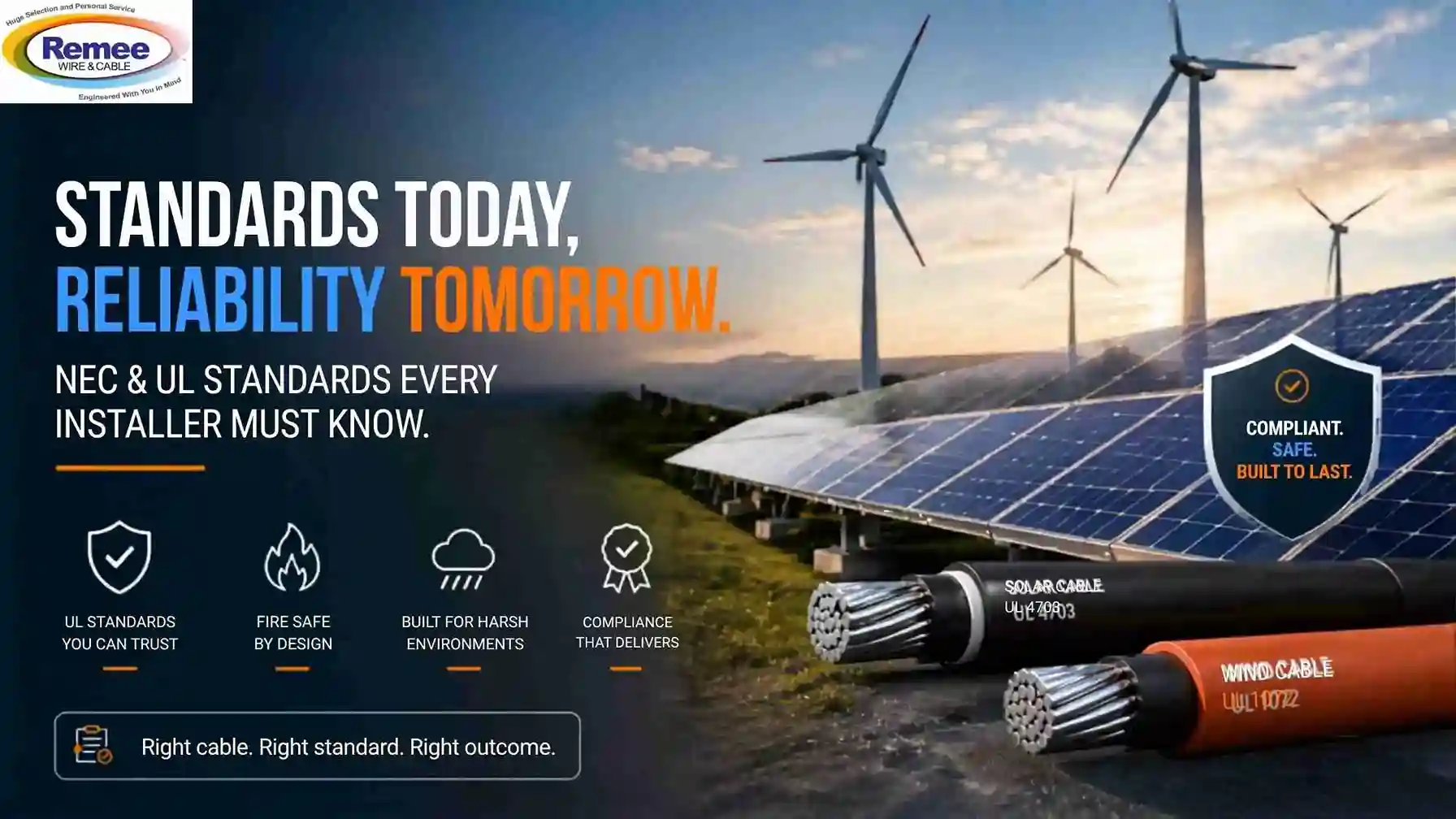
How NEC and UL Standards Shape Solar and Wind Cable Installation Success
Summary: Cable compliance is an increasingly vital aspect of modern solar and wind installations. Standards such as UL 4703, UL 1072, IEEE 1202 FT4, and CSA C 22.2 specify how a cable will operate, not in an ideal laboratory setting, but in the real world. This guide explains these specifications in practical, installable terms so that installers can make compliant selections that decrease risk, first-time inspection pass rates, and system reliability.
What happens if a cable meets all specification requirements but fails compliance during inspection?
In solar and wind projects, this is more frequent than in many installations. Installers are responsible not only for installing a system that operates but also for ensuring that every part of the system conforms to strict UL requirements and installation code. A single mismatch in specification can lead to inspection failure, rework, or long-term reliability issues. Understanding how these specifications apply in a real-world environment-and not just on a datasheet-is the key to preventing costly mistakes.
Solar Cables Built for Long-Term Outdoor Exposure and Reliability
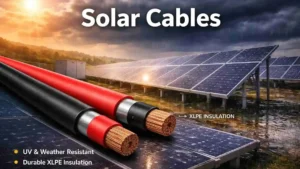
Solar systems, of course, operate in some of the harshest environments, including prolonged exposure to UV, wide temperature ranges, and consistent moisture. As a result, properly rated solar cables are crucial, as they are expected to operate for years without losing performance due to insulation degradation or signal attenuation. These specifications essentially state whether the cable can survive real-world installation and operation. As such, when choosing an installation, installers need to make sure they pick a cable that will survive the entire lifespan of the system.
The factors most relevant to solar installations are:
- Constant UV exposure and temperature stress
- Wet location reliability over time
- Insulation stability under outdoor conditions
- Verified UL 4703 compliance
Wind Cables Designed to Withstand Mechanical Stress and Harsh Conditions
Wind applications have their own specific challenges, many of which are centered on movement. Inside towers and throughout turbines, wind cables are exposed to extreme vibration, continued movement, changing environmental conditions, and much more. The primary design criteria for wind cables are their ability to handle consistent movement without performance degradation. Also, due to its common installation inside the tower itself or for direct burial, water exposure must be accounted for in this system. This means UL requirements play an essential role in ensuring that cables designed for wind perform safely in these environments.
The factors most relevant to wind installations are:
- Resistance to vibration and mechanical fatigue
- Performance in wet and exposed conditions
- Structural durability under continuous movement
- Proven UL compliance for applicable standards
Understanding UL Requirements for Safe and Compliant Installations
UL requirements essentially act as the ultimate checkpoint in the installation process. They test whether the cable will perform to expectations when tested under real-world conditions, not in a carefully controlled environment. Installers of renewable energy installations rely on UL specifications to avoid performance failure after the system is live and to eliminate risks inherent to failure due to heat, moisture, or electrical stress. UL requirements normally consider factors such as:
- Insulation performance under load
- Resistance to environmental exposure
- Flame characteristics in grouped installations
- Mechanical durability over time
UL 4703: The Standard Behind Reliable Solar Cable Performance
UL 4703 is specifically the standard by which all solar cables are evaluated. It dictates performance specifications after exposure to sunlight, water, and high temperatures for extended periods. From the viewpoint of an installer, this standard translates to confidence that the selected cable will survive the specific needs of an array system, from the heat of a rooftop to exposure to outside weather for extended years without pre-failure.
UL 1072: Ensuring Safe Medium-Voltage Power Distribution
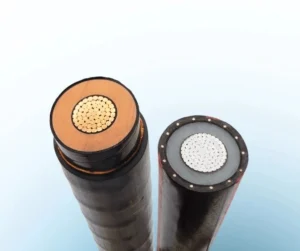
As installations grow in size and move beyond simple, localized systems, higher-voltage distribution becomes a necessity. This is what UL 1072 covers. It ensures that these types of cables will not fail in high voltage scenarios without losing insulation or performance characteristics. In larger solar and wind applications, these cables must move power across vast distances and ensure system reliability from the outset.
IEEE 1202 FT4: Standards for Cable Fire Safety in Installations
Fire hazard may not be readily apparent at installation time, but it becomes an issue when the system is live. IEEE 1202 FT4 assesses cable behavior in a vertical tray installation, especially regarding flame spread.
In applications where several cables are run together, for instance, within substations and turbine installations, IEEE 1202 FT4 is a vital aspect of safety. It will determine if a specific issue remains local or spreads throughout the system.
CSA C 22.2: Cross-border Requirements
CSA C 22.2 comes into play for larger-scale projects, cross-border installations, or for multi-standard certification purposes, ensuring the cables meet more demanding safety and performance standards over and above basic UL specifications.
Installers involved in trans-border or larger solar and wind systems will find this an important requirement. It saves considerable effort by avoiding the need to have cables re-evaluated or re-designed.
Cable Selection for the Overall Renewable Energy Installations
The typical renewable energy installation is a complex networked solution; solar installations are linked to distribution networks, wind turbines are connected via substations, etc. Everything needs to function and interlink successfully.
It is at this stage that cable selection becomes a system-level problem. Selection criteria will focus on ensuring that both solar and wind cables meet required standards and that a strong link is established between the two types without creating any weaknesses in the system as a whole. A well-selected installation ensures the following:
- Inspection and approval at all stages of the project
- Consistent operation regardless of environment
- Durability of operation for the life of the installation
Where several compliance requirements exist, ask an expert at Remeespecialist to evaluate your needs.
Making the Proper Cable Choice for your solar and wind Applications
Within a wind or solar installation, compliance is part of the design from the start; there is little room for error. Standards such as UL 4703, UL 1072, and IEEE 1202 FT4 are put into place to account for failures experienced during installation or the system’s lifetime.
Choosing the appropriate cable goes beyond the code. The success of the system’s installation, the speed of approval, and the reliability over its lifetime are directly dependent on careful selection. Contact Remee to discuss renewable energy cable options for your project.
FAQ
Q1: What are the consequences of using non-UL-compliant cables in solar or wind projects?
A: Non-UL-compliant cables may fail inspection, delay the project, and present potential safety hazards in operation. Within both solar and wind installations, using UL-compliant cables is a necessity, both for final approval and long-term operational safety within the elements.
Q2: How can I identify solar cables that meet UL 4703 requirements?
A: Cables that comply with UL 4703 will typically be marked with this rating on their jacket or specified within the manufacturer’s datasheet. For installers, this is reassurance that the cable is tested for exposure to sunlight (UV), moisture, and wide temperature variations in solar applications.
Q3: When is the use of UL 1072-rated cables appropriate in renewable energy systems?
A: UL 1072 relates to medium-voltage applications commonly found within large-scale wind or solar farms. The cable is used for the transmission of electrical power across the installation over a greater distance or at higher voltage levels.
Q4: Why is fire testing like IEEE 1202 FT4 crucial when selecting cables?
A: When cables are installed within a cable tray or bundled together within the structure of a turbine, potential flame spread increases. The IEEE 1202 FT4 standard ensures that the cable resists flame spread.
Q5: Are CSA C22.2 standards necessary for all renewable energy installations?
A: No, but it is a necessary standard if the installation is for the Canadian market or if it is a cross-border application requiring multi-standard approval. Using both UL and CSA-approved cables avoids additional qualification or redrafting for these installations.