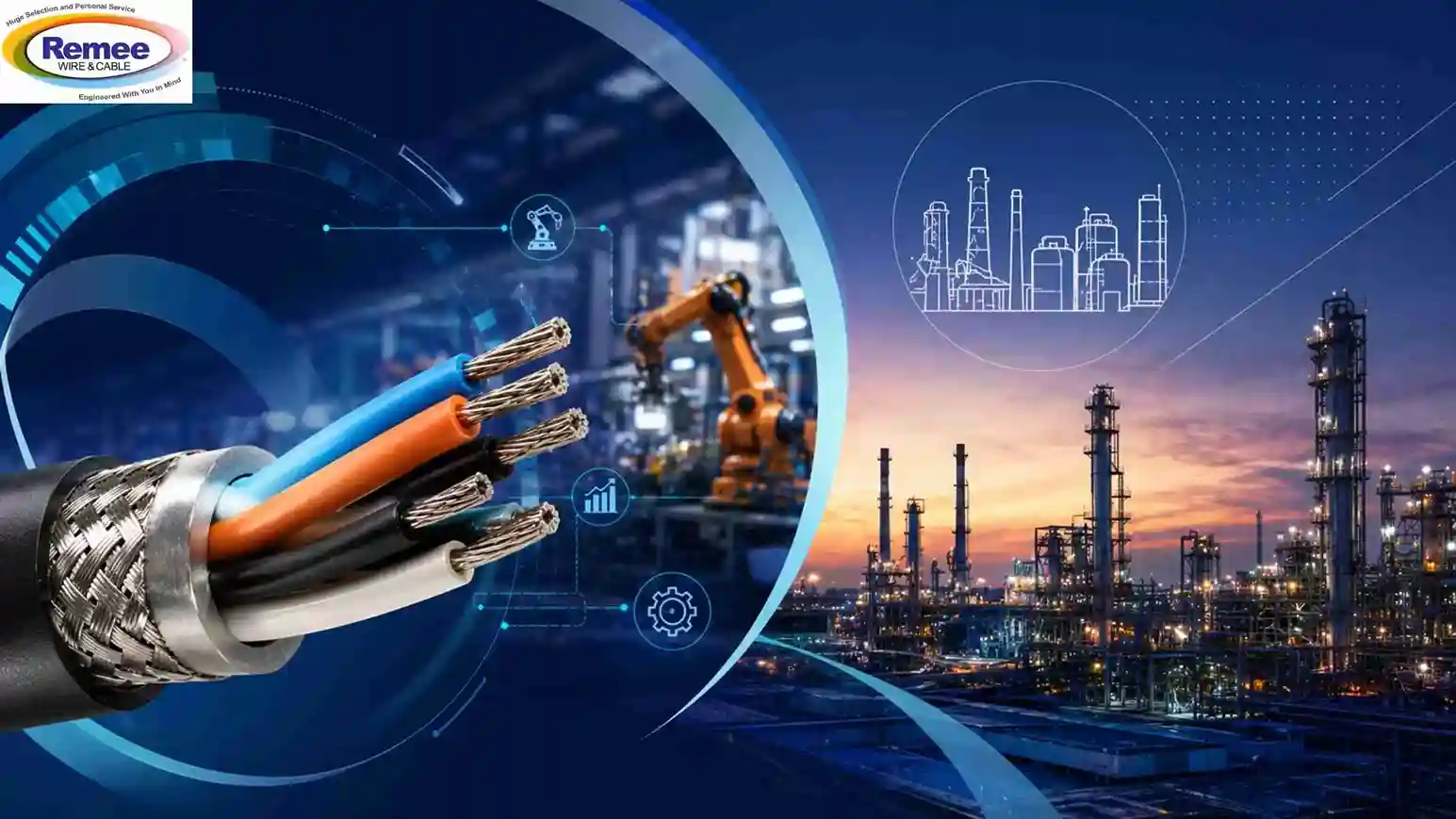
Instrumentation Cable Market to Reach $23.72 Billion by 2037, Industry 4.0 Fuels 8.7% CAGR Growth
Summary: Driven by industrial automation, smart infrastructure, and sophisticated process control systems, the instrumentation cable market is poised for substantial growth. Projected to reach $23.72 billion by 2037 with an 8.7% CAGR, this expansion underscores the increasing demand for precise and reliable signal transmission. The widespread adoption of Industry 4.0 is further propelling the need for dependable instrumentation cables across critical industries.
The instrumentation cable market is forecast to reach $23.72 billion by 2037, at a consistent CAGR of 8.7%. This expansion is more than a measure of industrial development; it’s an indicator of the evolution in how industrial systems operate. Modern facilities are far more interconnected, automated, and reliant on constant data exchange than ever before, making signal transmission reliability a cornerstone of overall system performance. It serves an unseen but vital function as a pipeline, facilitating information flow between devices, control systems, and monitoring platforms. As industries embrace data-driven operations, even minor variations in signal transmission can have significant system-wide implications.
Why Instrumentation Cable Is Becoming Essential in Modern Infrastructure
In today’s industrial settings, communication issues often manifest before mechanical problems. Minor delays, interference, or signal distortion can disrupt how systems interpret and react to real-time input. Instrumentation cable is specifically designed to prevent these problems, ensuring stable signal transfer between field devices and control systems. As infrastructure grows more complex, simply connecting devices is no longer sufficient. Consistency, shielding, and long-term durability are becoming equally important. In practical terms, instrumentation cable directly impacts system performance, especially in multi-device environments operating continuously under significant load.
Industrial Automation and the Growing Need for Precise Signal Transmission
Automation has dramatically increased the pace of industrial operations, transforming systems that once required periodic human intervention into continuous data streams. Within these automated environments, industrial automation cables must support uninterrupted communication between sensors, controllers, and processing units. These cables are frequently used to maintain signal integrity in electrically noisy, high-density environments, offering key advantages such as stable transmission even with interference from surrounding equipment and consistent real-time system responses. As automation becomes more prevalent across industries, a robust communication infrastructure is becoming a fundamental aspect of system design, rather than an afterthought.
The Role of Instrumentation Cable in SCADA and Process Control Systems
SCADA and process control systems are utterly dependent on the accuracy of the data they receive. Every signal represents a measurable aspect of a system, such as temperature, pressure, or flow. Instrumentation cable ensures that these signals are transmitted without distortion, a critical factor in large-scale facilities where continuous operation demands unwavering control and stability. Unlike some systems that can tolerate minor fluctuations, process control environments necessitate steady performance across all connection points, a stability that is maintained by ensuring consistent and uninterrupted data flow throughout the system.
Why the Oil and Gas Industry Relies on High-Performance Cable Systems
The oil and gas industry presents some of the most demanding environments for cable performance. Installations are frequently subjected to extreme temperatures, moisture, chemical exposure, and significant mechanical stress. Oil and gas industry cables for this sector must possess both durability and signal accuracy under these conditions, and instrumentation cable is expected to support monitoring and control systems without performance degradation over time. In these settings, cable performance is intrinsically linked to operational reliability, as any disruption to signal transmission can directly impact monitoring accuracy, system safety, and overall efficiency.
Performance Challenges: Signal Integrity, Interference, and Environment
A multitude of external factors can affect signal transmission in industrial settings, and while these issues may not always manifest immediately, they can degrade performance over time. Instrumentation cable must be designed to overcome challenges such as electromagnetic interference from machinery, environmental exposure to moisture and temperature fluctuations, and minimal signal loss over long transmission distances, along with the physical stresses associated with installation. Maintaining signal integrity in complex, multi-system facilities requires meticulous planning and appropriately designed cabling solutions.
Where Remee TekWire™ Cable Fits in Industrial Applications
As industrial systems become increasingly sophisticated, specialized cabling solutions are in high demand, and Remee’s TekWire™ cable is particularly suited for applications requiring stable signal transmission in automation and process-driven environments. It is often used in conjunction with other systems where consistent communication between components is crucial, performing reliably in both controlled settings and harsher field conditions to maintain stable and accurate data transmission.
What This Market Growth Means for Future Installations
The expanding market is a direct reflection of the fundamental shift occurring in how industrial systems are designed. With operations becoming more data-centric, the underlying infrastructure must adapt accordingly. Instrumentation cable is now a consideration in the early design phases rather than a secondary afterthought, impacting system reliability, scalability, and long-term performance. Future installations are expected to prioritize reliable signal transmission over complex networks, compatibility with evolving automation systems, adaptability to various operational and environmental conditions, and sustained stability under continuous use. When cable selection directly influences system behavior, it becomes an integral factor in overall system design and performance planning. When cable selection begins to affect system performance, not just installation, you need more considerations than just meeting standards and specifications. If you are evaluating options for complex industrial environments, ask an expert at Remee to provide practical, application-specific guidance, or get a quote for a specific custom-made cable you have in mind.
FAQ
Q1: Why is instrumentation cable important in modern industrial systems?
A: Instrumentation cable ensures accurate communication between field devices and control systems. In automated environments, even minor inconsistencies in signal transmission can impact system response and operational efficiency.
Q2: How do industrial automation cables contribute to Industry 4.0 systems?
A: Industrial automation cables support continuous data exchange between connected devices, helping maintain stable communication in environments where multiple systems operate simultaneously under constant load.
Q3: What makes cables for oil and gas industry applications different?
A: These cables are designed to withstand harsh environmental conditions, including temperature extremes, moisture, and chemical exposure, while maintaining reliable signal transmission for monitoring and control systems.
Q4: How does instrumentation cable support SCADA systems?
A: It transmits signals from field instruments to control systems without distortion, enabling SCADA platforms to monitor real-time conditions and respond accurately.
Q5: Where is the Remee TekWire™ cable typically used?
A: Remee TekWire™ cable is used in industrial environments that require stable and reliable signal transmission, particularly in automation and process control applications where consistent communication is essential.