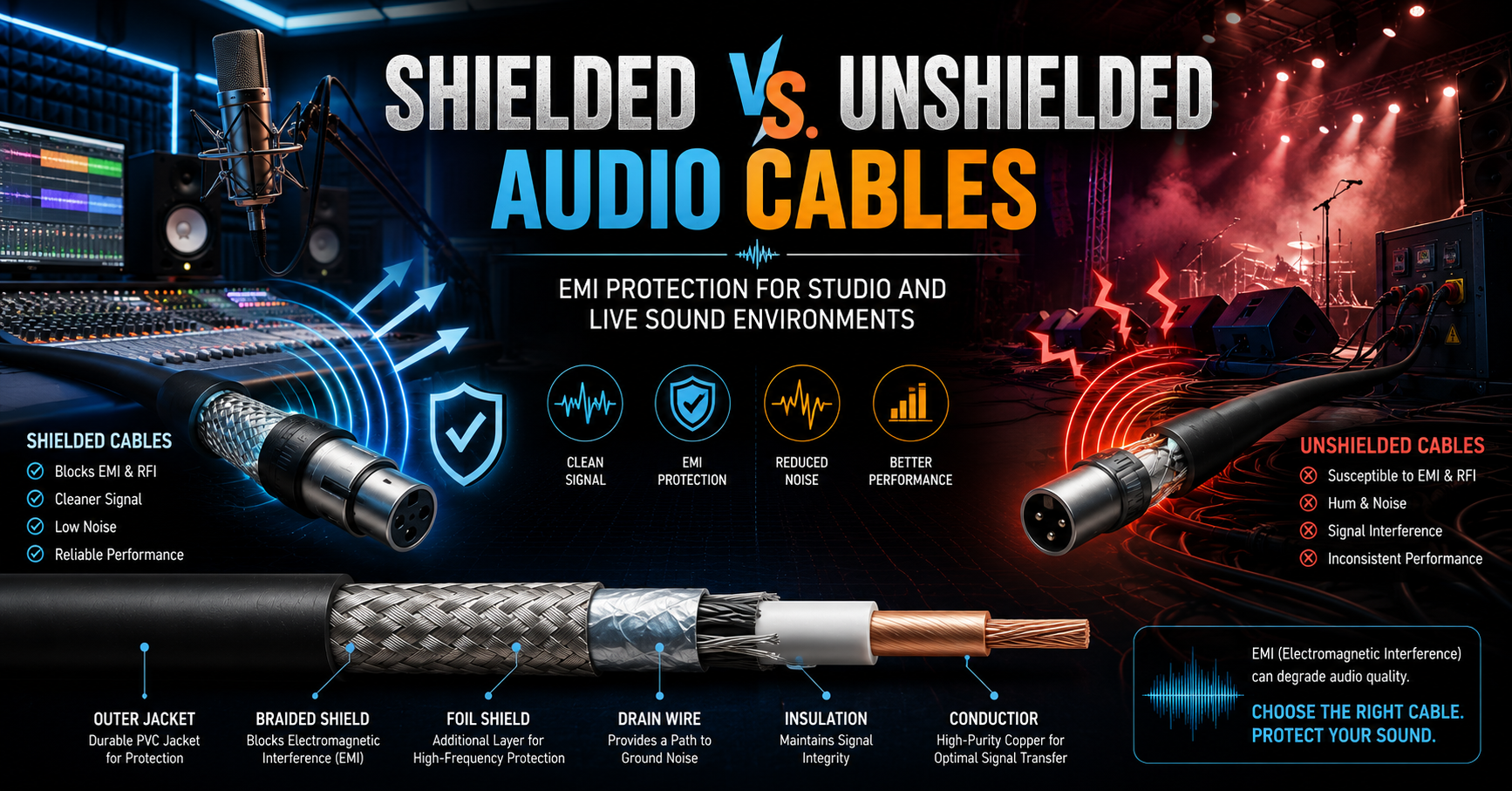
Shielded vs. Unshielded Audio Cables: EMI Protection for Studio and Live Sound Environments
Modern audio systems operate in increasingly complex electromagnetic environments. From large concert venues and broadcast studios to corporate AV installations and houses of worship, audio cables often run alongside power lines, lighting systems, LED walls, networking equipment, and wireless communication devices.
Without the right cable construction, electromagnetic interference (EMI) can introduce unwanted noise, hum, and signal degradation.
Choosing between shielded and unshielded audio cables is essential for maintaining clean, reliable audio transmission.
While unshielded cables may be suitable for certain short-distance applications, professional environments typically require robust shielding to minimize interference and preserve signal integrity.
This guide explains the differences between shielded and unshielded cables, compares common shielding types, and explores why TEKwire Audio Cables are engineered to deliver dependable performance in demanding studio and live sound environments.
Explore TEKwire audio cables for crystal-clear sound
Understanding Electromagnetic Interference (EMI)
Electromagnetic interference (EMI) is unwanted electrical noise generated by nearby electronic equipment. In professional audio systems, EMI can affect both analog and digital signals, resulting in audible hum, buzzing, clicks, or distortion.
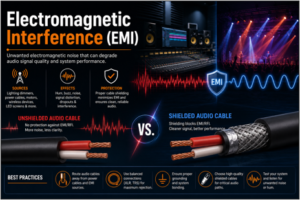
Learn how shielded audio cables reduce EMI and improve signal quality in professional audio environments.
Common sources of EMI include:
- Power distribution systems
- LED lighting fixtures
- Variable frequency drives (VFDs)
- Radio transmitters
- Wireless microphones
- Ethernet and data cables
- Video production equipment
- High-powered amplifiers
As modern venues become increasingly technology-dense, protecting audio signals from interference has become more important than ever.
What Are Shielded Audio Cables?
Shielded audio cables include an additional conductive layer surrounding the signal conductors. This shield intercepts electromagnetic interference before it reaches the audio signal, significantly reducing noise and maintaining signal quality.
Most professional TEKwire Audio Cables are designed with shielding options that improve performance in electrically noisy environments while supporting reliable signal transmission across long cable runs.
Shielded cables are commonly used in:
- Recording studios
- Live concert venues
- Broadcast facilities
- Podcast studios
- Theaters
- Conference centers
- Educational institutions
- Houses of worship
Discover professional-grade shielded audio solutions.
What Are Unshielded Audio Cables?
Unshielded audio cables do not include an external shielding layer around the conductors.
They may be appropriate for:
- Short internal equipment connections
- Low-noise environments
- Controlled installations with minimal electrical interference
However, in most professional applications, unshielded cables are more susceptible to EMI, making them less suitable for environments where reliable audio quality is critical.
Shielded vs. Unshielded Audio Cables
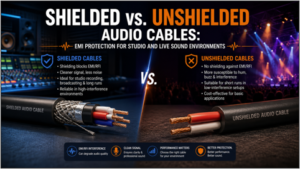
Compare shielded and unshielded audio cables to choose the right solution for studio and live sound environments.
| Feature | Shielded Cables | Unshielded Cables |
| EMI Protection | Excellent | Limited |
| Signal Integrity | High | Moderate |
| Long Cable Runs | Ideal | Less suitable |
| Professional Installations | Recommended | Limited applications |
| Electrical Noise Resistance | High | Low |
| Live Sound Systems | Preferred | Not typically recommended |
For studios, live productions, and commercial AV systems, shielded TEKwire Audio Cables provide superior protection against interference.
Types of Cable Shielding
Different shielding designs offer varying levels of EMI protection, flexibility, and durability. Selecting the right shield depends on the installation environment and application requirements.
Braided Shield
Braided shielding consists of woven copper strands surrounding the cable core.
Advantages
- Excellent mechanical durability
- High flexibility
- Strong protection against low-frequency interference
- Long service life
- Reliable performance in portable applications
Braided shields are commonly used in touring, stage production, and permanent installations where cables experience frequent movement.
Serve Shield
A serve (spiral) shield wraps copper strands around the cable in a spiral pattern.
Benefits include:
- Greater flexibility than braided designs
- Easier cable termination
- Lightweight construction
- Good EMI protection for many audio applications
Serve shielding is often selected where flexibility is a priority, such as microphone and instrument cables.
Foil Shield
Foil shielding uses a thin aluminum or metallic polyester layer to provide nearly complete coverage around the conductors.
Key advantages include:
- Excellent high-frequency EMI protection
- Nearly 100% shield coverage
- Lightweight construction
- Ideal for fixed installations
Because foil shields can be less resistant to repeated flexing, they are commonly used in permanent installations rather than touring applications.
Why Conductor Geometry Matters
Shielding is only one part of cable performance. Conductor geometry also plays a major role in preserving signal quality.
Professionally engineered TEKwire Audio Cables use optimized conductor layouts that help reduce electrical noise while maintaining low capacitance.
Benefits include:
- Reduced signal loss
- Improved high-frequency response
- Better audio clarity
- Lower crosstalk
- Stable impedance
- Enhanced performance over long cable runs
Low-capacitance cable designs are particularly important for microphones, musical instruments, and high-resolution audio systems where preserving signal fidelity is essential.
Choosing the Right Cable for Your Environment
Different environments require different cable constructions.
-
Recording Studios
Studios often contain computers, digital consoles, networking equipment, and lighting systems that generate EMI. Shielded cables help maintain clean recordings and accurate monitoring.
-
Live Sound Venues
Concert stages combine power distribution, amplifiers, wireless systems, LED walls, and moving lights in proximity. Durable shielded cables minimize unwanted noise during performances.
-
Broadcast Facilities
Remote production and broadcast environments require reliable signal transmission with minimal interference. Individually shielded cable designs help ensure consistent audio quality throughout complex installations.
-
Corporate AV Systems
Conference centers and meeting rooms increasingly combine audio, video, networking, and automation systems. Shielded cables help maintain dependable communication while reducing electrical noise.
Benefits of Individually Shielded Audio Cables
In multi-pair cable designs, individually shielding each pair provides additional protection against both external interference and internal crosstalk.
Advantages include:
- Improved channel isolation
- Reduced signal interference
- Better noise rejection
- Cleaner audio transmission
- Enhanced reliability for complex installations
This design is especially valuable in broadcast facilities, recording studios, and professional AV systems where multiple audio channels are bundled together.
Installation Best Practices for EMI Protection
Proper installation further improves cable performance.
Recommended practices include:
- Keep audio and power cables separated whenever possible.
- Cross power cables at 90-degree angles when necessary.
- Avoid running audio cables parallel to electrical feeders.
- Maintain proper cable bend radius.
- Use quality connectors and secure grounding techniques.
- Select cable types appropriate for the installation environment.
Following these practices helps maximize the performance of even the best shielded cable systems.
Applications for TEKwire Audio Cables
TEKwire Audio Cables are designed to support a wide range of professional audio and communication applications, including:
- Recording studios
- Live concert production
- Broadcast facilities
- Houses of worship
- Corporate AV systems
- Educational campuses
- Performing arts centers
- Sports venues
- Remote production systems
- Commercial sound installations
Their engineered shielding options and high-performance construction make them suitable for installations where reliability and signal integrity are essential.
Choose the Right Audio Cable for Reliable Performance
As professional audio environments become more electrically complex, selecting the appropriate cable construction is critical. While unshielded cables may be sufficient for limited applications, shielded designs provide the EMI protection needed for studios, broadcast facilities, and live sound venues where audio quality cannot be compromised.
Understanding the differences between braided, serve, and foil shielding helps installers choose the best solution for each application. Combined with optimized conductor geometry and low-capacitance design, high-quality TEKwire Audio Cables deliver dependable performance, reduced interference, and exceptional signal clarity.
Whether you’re designing a recording studio, outfitting a live event venue, or building a broadcast infrastructure, Remee’s TEKwire Audio Cables offer the durability, shielding, and performance required for today’s demanding professional audio environments.