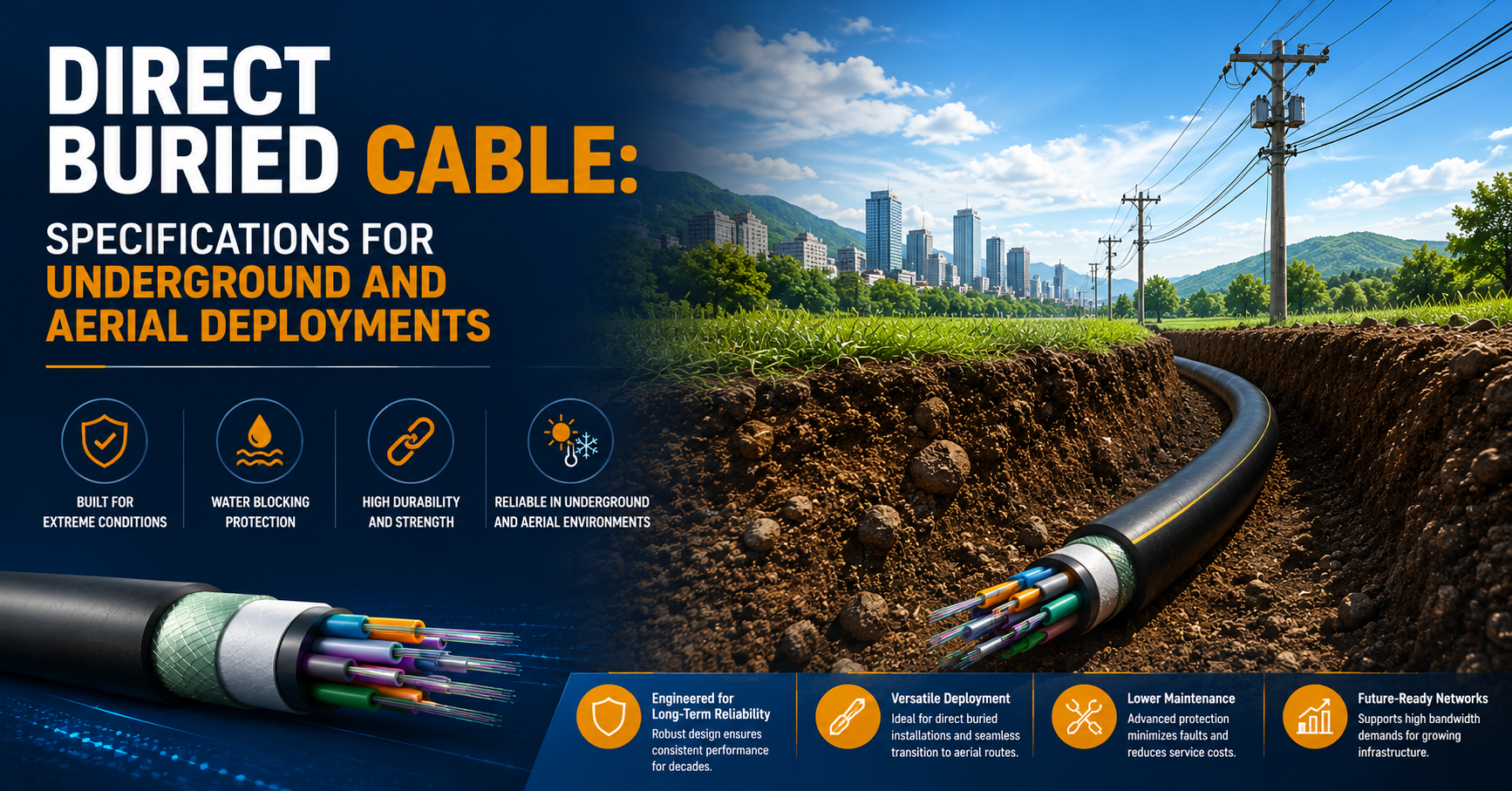
Direct Buried Cable: Specifications for Underground and Aerial Deployments
Outdoor network infrastructure is constantly exposed to moisture, temperature fluctuations, UV radiation, and mechanical stress. Selecting the right direct buried cable is one of the most important decisions for building a reliable fiber optic network that performs for years with minimal maintenance.
Whether you’re deploying fiber for telecommunications, industrial facilities, utility networks, smart cities, or educational campuses, the cable must be designed to handle harsh outdoor environments.
Unlike standard indoor fiber, a direct buried cable is engineered with rugged construction that protects optical fibers from water intrusion, soil pressure, rodents, and changing weather conditions.
Features such as gel-filled loose-tube construction, UV-resistant jackets, and high tensile strength make these cables ideal for both underground and aerial installations.
In this guide, we’ll explore the essential specifications of direct-burial fiber, discuss why an underground cable requires specialized construction, and explain the importance of selecting an Outdoor Plant (OSP)-rated solution.
What Is a Direct Buried Cable?
A direct buried cable is a fiber optic cable specifically designed for installation directly into the ground without requiring protective conduit. Its robust construction safeguards delicate optical fibers against moisture, crushing forces, chemicals, rodents, and temperature extremes.
Unlike indoor fiber cables, these outdoor solutions include multiple protective layers that maintain signal integrity even after years of environmental exposure. Their durability makes them an excellent choice for projects where long-term performance is critical.
Common applications include:
- Telecommunications infrastructure
- University and corporate campuses
- Industrial and manufacturing facilities
- Utility and energy networks
- Transportation systems
- Government and military projects
- Smart city infrastructure
Because they are engineered for demanding environments, these cables are among the most dependable options for outdoor fiber installations.
Looking for a reliable fiber solution for your next outdoor project?
Explore our range of high-performance direct buried cables and connect with our team to find the right solution for your installation needs.
Why Outdoor Deployments Need a Specialized Underground Cable
Outdoor environments present challenges that indoor installations never experience. Moisture, shifting soil, sunlight, and physical impact can all shorten the lifespan of standard fiber cables.
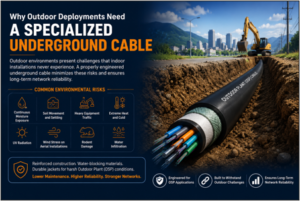
Common environmental risks include:
- Continuous moisture exposure
- Soil movement and settling
- Heavy equipment traffic
- Extreme heat and cold
- UV radiation
- Wind stress on aerial installations
- Rodent damage
- Water infiltration
A properly engineered underground cable minimizes these risks through reinforced construction, water-blocking materials, and durable jackets specifically designed for Outdoor Plant (OSP) applications. This helps reduce maintenance costs while improving long-term network reliability.
Gel-Filled Loose-Tube Construction
One of the defining features of a high-quality direct buried cable is its gel-filled loose-tube design.
Rather than tightly enclosing the optical fibers, loose tubes allow slight movement as temperatures fluctuate, preventing stress from reaching the fibers themselves.
The protective gel offers several key benefits:
- Blocks water migration
- Prevents moisture damage
- Cushions optical fibers
- Reduces mechanical stress
- Extends cable lifespan
If water enters one section of the cable due to accidental damage, the gel helps contain it, preventing moisture from spreading throughout the network. This proven design has become the preferred choice for long-distance outdoor fiber installations.
UV-Resistant Jackets for Outdoor Durability
Not every outdoor fiber installation remains below ground. Many networks transition between buried pathways and aerial routes, leaving portions of the cable exposed to sunlight.
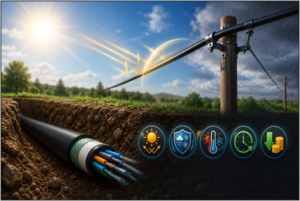
Over time, UV radiation can degrade ordinary cable jackets, causing them to crack, become brittle, and eventually fail.
OSP-rated direct buried cable solutions feature UV-resistant jackets that:
- Resist prolonged sunlight exposure
- Maintain flexibility over time
- Protect against harsh weather
- Extend overall service life
- Reduce replacement and maintenance costs
These jackets allow the same cable to perform reliably in both underground and aerial environments.
Tensile Strength Is Critical
Fiber optic cables experience considerable pulling forces during installation. If these forces exceed the cable’s rated tensile capacity, the internal fibers may become damaged, affecting network performance.
A high-quality direct buried cable is engineered to withstand:
- Long installation pulls
- Underground routing
- Aerial suspension
- Mechanical handling
- Expansion and contraction caused by temperature changes
Choosing a cable with the appropriate tensile rating helps installers complete projects safely while preserving fiber integrity. Always follow the manufacturer’s recommended installation guidelines and load limits.
Explore durable fiber solutions built to last
Best Practices for Underground Cable Installation
Proper installation is just as important as choosing the right underground cable. Following proven installation practices helps maximize service life and reduce future maintenance.
Maintain Proper Burial Depth
Installing the cable at the recommended depth protects it from landscaping equipment, excavation work, and surface loads. Local regulations typically specify minimum burial depths based on the application.
Prepare the Soil
Before installation, remove sharp rocks and debris that could damage the cable. Many contractors use a layer of sand bedding to provide additional protection around the cable.
Avoid Excessive Bending
Every fiber optic cable has a specified minimum bend radius. Exceeding this limit can increase signal loss or permanently damage the optical fibers.
Mark the Cable Route
Installing warning tape above the cable route helps prevent accidental damage during future excavation projects and simplifies maintenance.
Aerial Deployment Considerations
Many outdoor fiber networks transition from underground pathways to utility poles or building entrances. In these situations, the cable must withstand additional environmental stresses.
Key considerations include:
Wind Loading
Continuous wind movement can place repeated stress on suspended cables. Proper support hardware and cable design help prevent long-term fatigue.
Ice Accumulation
In colder climates, ice buildup adds significant weight to aerial cables. Selecting a cable with adequate mechanical strength helps maintain reliable performance.
Span Length
Longer aerial spans require higher tensile strength and carefully planned support systems to prevent excessive strain.
UV Exposure
Because aerial sections remain exposed to sunlight throughout their service life, UV-resistant jackets are essential for maintaining long-term durability.
Proper planning ensures reliable performance across both underground and aerial sections of the network.
Why OSP-Rated Fiber Matters
Outdoor Plant (OSP)-rated fiber cables are specifically manufactured to perform in demanding exterior environments. They undergo rigorous testing to verify resistance to environmental and mechanical stresses.
OSP-rated cables are tested for:
- Moisture resistance
- Temperature performance
- Mechanical durability
- UV resistance
- Crush resistance
- Long-term environmental reliability
Choosing an OSP-rated direct buried cable significantly reduces the risk of premature failure while lowering long-term maintenance costs. For organizations investing in critical communication infrastructure, this translates into improved reliability and lower total ownership costs.
Common Applications for Direct Buried Cable
A direct buried cable supports a wide range of industries where dependable outdoor connectivity is essential.
Typical applications include:
- Telecommunications backbone networks
- University campuses
- Healthcare facilities
- Manufacturing plants
- Transportation infrastructure
- Utility substations
- Renewable energy projects
- Government facilities
- Data center interconnections
- Smart city deployments
These environments demand continuous network availability, making durable outdoor fiber solutions the preferred choice.
Build Outdoor Networks That Last
Choosing the right direct buried cable involves much more than installing fiber below the surface. Successful outdoor deployments require cables that can withstand moisture, UV radiation, mechanical stress, temperature fluctuations, and years of environmental exposure.
Features such as gel-filled loose-tube construction, UV-resistant jackets, and high tensile load capacity all contribute to dependable performance in both underground and aerial installations. Combined with proper installation practices and an OSP-rated design, these features help extend cable lifespan, reduce maintenance requirements, and protect critical communications infrastructure.
Whether you’re building a new fiber network or expanding an existing one, investing in a high-quality underground cable solution ensures long-term reliability in even the harshest outdoor environments. Remee’s OSP-rated direct-burial fiber cables are engineered to deliver the durability and performance today’s outdoor networking projects demand.