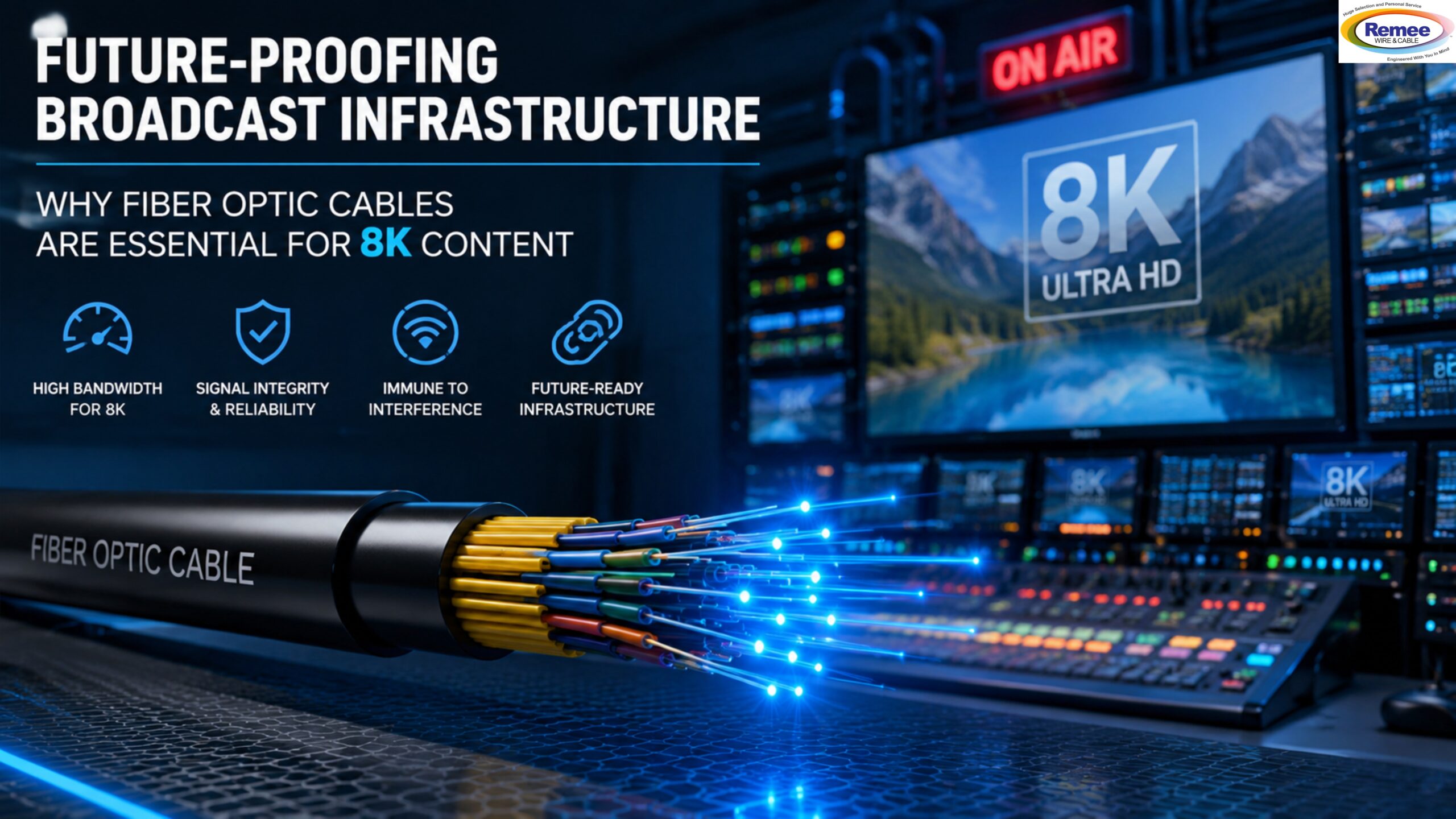
Future-Proofing Broadcast Infrastructure: Why Fiber Optic Cables Are Essential for 8K Content
The broadcast industry has always been driven by one goal: delivering clearer, faster, and more immersive viewing experiences. From standard definition to HD, then 4K, the demand for higher-quality content continues to rise. Today, broadcasters are entering the era of 8K content, where every detail matters and even the smallest infrastructure limitation can impact performance.
Imagine a live sports broadcast where millions of viewers expect every movement, every expression, and every moment to appear with incredible clarity. Behind that seamless experience is a complex network of technology working together. At the heart of this system are advanced broadcast cables that ensure data travels quickly, reliably, and without signal loss.
As content quality increases, traditional copper-based systems struggle to meet growing bandwidth requirements. This is where fiber optic cables are becoming essential, offering the speed, reliability, and long-distance performance needed for modern broadcast environments.
Upgrade your network today to stay ready for the 8K era.
The Growing Demand for Higher Resolution Broadcasting
The shift toward 8K content is transforming how broadcasters design their infrastructure. Higher resolutions require significantly more data transmission capacity compared to previous formats. Every frame carries massive amounts of information, meaning the network supporting it must be capable of handling continuous high-speed data flow.
Traditional broadcast cables built with copper technology can face limitations when transmitting large volumes of data over extended distances. Signal degradation, bandwidth restrictions, and interference can create challenges that affect production quality.
For studios, production houses, and live event broadcasters, maintaining consistent signal integrity is critical. A single disruption during a live broadcast can impact viewer experience and brand reputation. This is why investing in advanced connectivity solutions has become a necessity rather than an option.
How Fiber Optic Cables Support the Future of Broadcasting
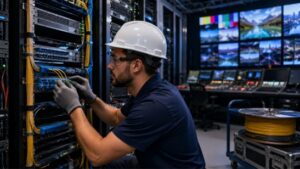
Fiber optic cables have changed the way broadcast infrastructure handles data transmission. Unlike copper cables, which rely on electrical signals, fiber optics uses light to transmit information. This allows them to deliver extremely high bandwidth while maintaining performance across longer distances.
For 8K content, this capability is especially valuable. Large video files and real-time broadcasts require fast, stable, and uninterrupted transmission. Fiber technology reduces the challenges associated with high-volume data transfer, making it an ideal choice for next-generation broadcast systems.
Another major advantage is immunity to electromagnetic interference (EMI). Broadcast environments often contain numerous electronic devices, lighting systems, and equipment that can create interference. Fiber optic technology eliminates this concern by using optical signals, helping maintain clean and reliable communication.
Why Copper Cables Are No Longer Enough for 8K Broadcasting
For decades, copper-based broadcast cables played an important role in studios and production facilities. However, as technology advances, its limitations become more noticeable.
Copper cables can experience signal loss over longer distances and may require additional equipment to maintain performance. They are also more vulnerable to electromagnetic interference, which can affect signal quality in complex broadcast environments.
In contrast, fiber optic cables provide a future-ready solution by supporting higher bandwidth demands without compromising reliability. They allow broadcasters to upgrade their systems without constantly replacing infrastructure as content requirements continue to evolve.
The transition to fiber is not just about supporting today’s technology; it is about preparing for tomorrow’s innovations.
Explore fiber optic solutions to future-proof your broadcast infrastructure today.
The Role of Tight Buffer Cable in Broadcast Infrastructure
Modern broadcast facilities require cabling solutions that are not only fast but also practical for installation and maintenance. A tight buffer cable is designed to provide enhanced durability and flexibility, making it suitable for structured environments such as studios, control rooms, and production facilities.
Unlike loose tube designs, a tight buffer cable places protective material directly around the fiber, helping improve handling and simplify installation. This makes it a reliable choice for indoor broadcast applications where space management and long-term performance are important.
Solutions such as Remee’s Clearcast™ broadcast cables are designed to support demanding broadcast environments by offering families of fiber optic cables, copper cables, hybrids (i.e., used with SMPTE 311 cables), and custom-made cable configurations.
Building a Future-Ready Broadcast Network
Future-proofing a broadcast facility requires more than upgrading cameras and production equipment. The entire infrastructure must support increasing data demands. Choosing the right broadcast cables ensures that every component of the workflow, from content creation to final delivery, operates smoothly.
Fiber-based systems provide scalability, allowing broadcasters to adapt as new technologies emerge. Whether it is 8K broadcasting, advanced streaming platforms, or future content formats, fiber infrastructure provides the foundation needed for long-term growth.
The investment in fiber optic cables is ultimately an investment in reliability, performance, innovation, and future-pr
oofing. As audiences continue to expect higher-quality viewing experiences, broadcasters must ensure their networks are ready to deliver.
Building the Future of Broadcasting with Advanced Fiber Infrastructure
The future of broadcasting depends on infrastructure that can keep pace with rapidly evolving technology. As 8K content becomes more common, the limitations of traditional systems highlight the need for advanced connectivity solutions.
Fiber optic cables provide the bandwidth, signal integrity, and interference protection required for modern broadcast environments. When combined with solutions such as tight-buffer cable technology, they offer broadcasters a reliable path to building stronger, future-ready networks.
For organizations looking to support next-generation content delivery, upgrading to advanced broadcast cables is a crucial step toward maintaining quality, efficiency, and competitiveness in the evolving media landscape.
Schedule your free consultation today.
FAQs
-
Why are Fiber Optic Cables important for 8K broadcasting?
Fiber-optic cables provide the high bandwidth and reliable data transmission needed to handle the large amount of information required for 8K content. They also maintain signal quality over longer distances.
-
How are broadcast cables different for 8K content requirements?
Modern broadcast cables must support higher data speeds, reduced signal loss, and better reliability. Fiber-based solutions are designed to meet these increased performance demands.
-
What is a tight buffer cable used for in broadcast applications?
A tight-buffer cable is commonly used in indoor broadcast environments because it offers durability, flexibility, and ease of installation while protecting the optical fiber.
-
Can Fiber Optic Cables reduce interference issues?
Yes, fiber optic cables use light signals instead of electrical signals, making them resistant to electromagnetic interference and helping maintain cleaner transmission.
-
Why should broadcasters invest in fiber infrastructure now?
Investing in fiber infrastructure helps broadcasters prepare for future technologies, including higher-resolution formats and increased content delivery demands.