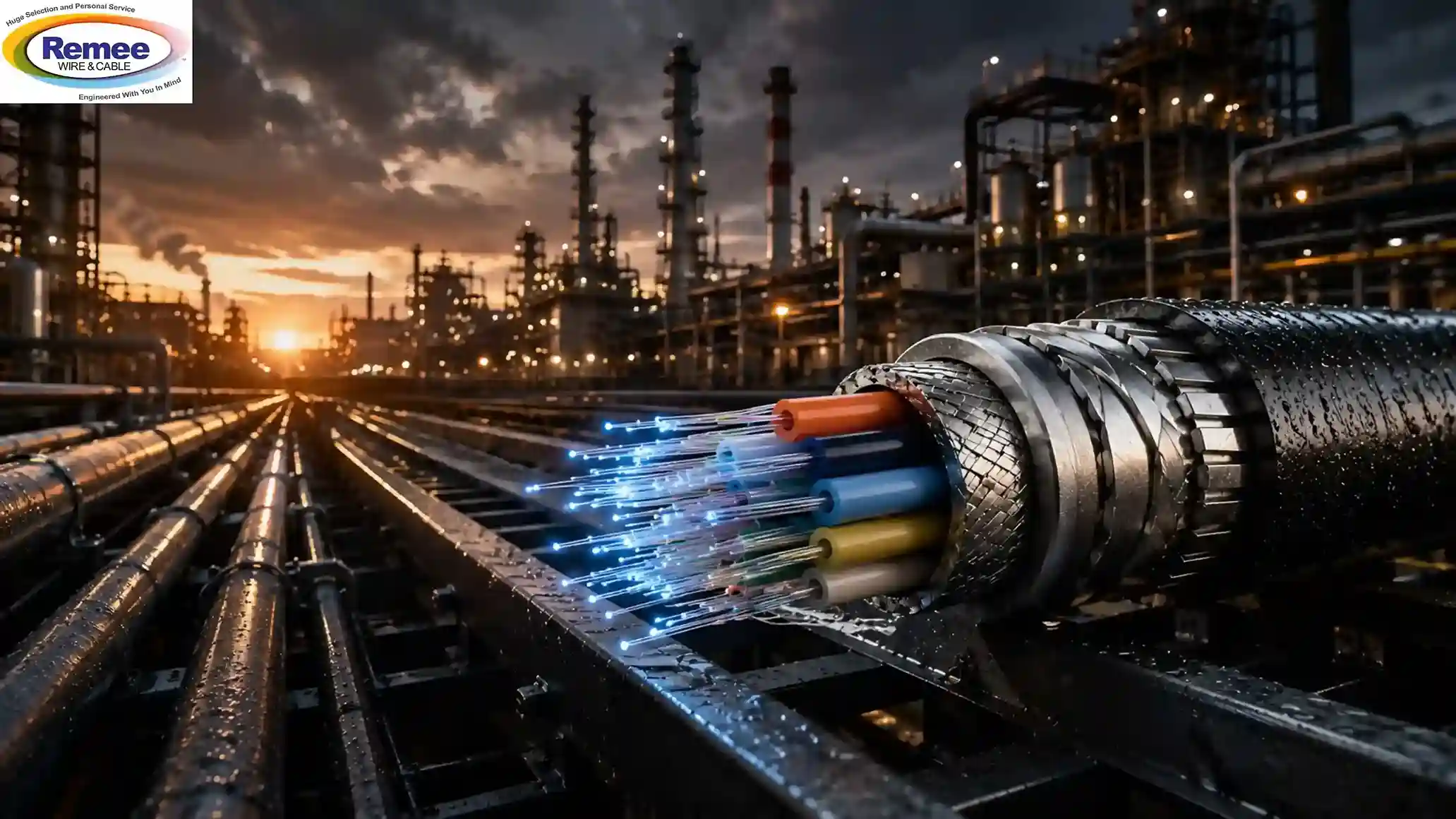
Can Armored Fiber Optic Cables Prevent Costly Network Failures?
Summary: Industrial environments place constant stress on network infrastructure, making armored fiber optic cables a critical component for maintaining reliable connectivity. Unlike office settings, fiber installations often run through vibrating machinery, crowded conduit systems, outdoor cable trays, and aging facilities that were never designed to support today’s bandwidth requirements or harsh environmental conditions.
And in most cases, the actual fiber is not the weak point.
The problems usually start during installation or years later, after constant physical stress begins wearing everything down. A tight bend here. A crushed section there. Moisture intrusion that gradually leads to signal instability over time.
That is why armored fiber optic cables have become standard in many industrial deployments. The goal is not just faster data transmission. It is building infrastructure that can survive real operating conditions without becoming a maintenance headache later.
Why Industrial Fiber Requires More Physical Protection
Industrial networks deal with far more mechanical stress than a traditional office setup ever will.
Vibration from heavy equipment, crowded cable pathways, maintenance activity, humidity, and changing temperatures all place pressure on the physical layer of the network. Even well-designed systems can run into reliability problems if the cabling itself is not properly protected.
Most installers have seen it firsthand. Fiber failures often happen long before bandwidth limits are reached.
In many facilities, the damage starts during the cable pull itself.
A heavy duty fiber optic cable helps reduce risks like:
- Crushing during installation
- Abrasion in congested pathways
- Long-term vibration damage
- Exposure to heat, moisture, and UV conditions outdoors
These are not edge-case problems in industrial environments. These are common installation realities in which armored fiber optic cables provide a much stronger layer of protection.
Need help selecting the right armored fiber optic cable for demanding industrial environments?
Ask an expert at Remee about deployment requirements, routing conditions, and long-term infrastructure reliability.
How Armored Fiber Optic Cables Handle Real-World Stress
Standard fiber works perfectly well in controlled environments. Industrial facilities are a different story.
Armored fiber optic cables add another layer of protection around the fiber core to help prevent mechanical damage. Depending on the application, that protection may come from interlocking aluminum armor or corrugated steel armor designed to improve durability without compromising signal performance.
That extra reinforcement matters most in places where cables stay exposed to movement, equipment traffic, or difficult routing conditions. In many retrofit projects, an armored fiber cable offers a more dependable long-term solution than standard fiber cable.
You will commonly see armored fiber optic cables deployed in:
- Manufacturing facilities
- Transportation infrastructure
- Utility plants
- Renewable energy sites
- Outdoor industrial installations
Because in these environments, protecting the cable physically is just as important as protecting signal integrity.
Aluminum-Armored vs. Corrugated-Steel Designs
Not every armored fiber cable is built for the same environment.
Interlocking aluminum-armored designs are usually selected when crush resistance and impact protection are the top concerns. These cables hold up well in installations where accidental equipment contacts and damage the cable, or if mechanical pressure is difficult to avoid.
Corrugated-steel tube designs solve a different problem: flexibility.
And that becomes important faster than most project drawings suggest.
On paper, cable pathways tend to look clean and straightforward. In active industrial facilities, this rarely stays that way. Installers often end up working around packed conduit runs, aging infrastructure, machinery, or retrofit conditions that leave very little routing space.
In those situations, added cable flexibility can make the installation far more manageable. That is one reason many integrators prefer an armored fiber cable for facilities with tighter routing requirements.
Why Bend-Insensitive Fiber Matters in Industrial Routing
Perfect routing paths are rare in industrial environments.
Fiber typically has to move around control cabinets, conduit bends, machinery, and infrastructure that was never intended to support future network expansion. Traditional fiber can experience signal degradation when bends become too tight.
Bend-insensitive and flexible fiber helps reduce that risk by maintaining stronger signal performance in tighter routing conditions.
For installers, that usually means:
- Easier routing in confined spaces
- Lower attenuation risk
- Better flexibility during deployment
- More reliable long-term performance
Small routing compromises happen in almost every industrial install. Bend-insensitive fiber gives technicians more margin for those real-world conditions, especially when paired with heavy duty fiber optic cable constructions designed for industrial environments.
Outdoor Conditions Create a Different Set of Problems
Outdoor infrastructure introduces another level of stress entirely.
An outdoor armored fiber optic cable may spend years exposed to:
- UV radiation
- Extreme temperature swings
- Moisture intrusion
- Freeze-thaw cycles
- Physical outdoor impact
Over time, those conditions gradually break down poorly protected cable systems and increase maintenance demands.
That is why selecting the right cable is not simply about transmission capacity. Environmental durability plays a major role in long-term fiber optic cable reliability, especially in industrial or utility applications where downtime becomes expensive quickly.
In these situations, an outdoor armored fiber optic cable provides the additional environmental protection needed to support stable long-term performance.
Planning an outdoor or high-vibration installation? Ask an expert at Remee about armored and heavy duty fiber optic cable options built for industrial and outdoor deployments.
Choosing the Right Armored Fiber Cable
More protection is not automatically better.
Some installations need maximum crush resistance. Others benefit more from flexibility, especially in retrofit projects or facilities with difficult routing paths.
When evaluating an armored fiber cable, installers typically look at:
- Indoor vs. outdoor deployment
- Routing complexity
- Mechanical stress exposure
- Maintenance accessibility
- Environmental conditions
The best cable choice usually comes down to balancing durability with practical installation requirements.
Because a cable that performs well in the field is not necessarily the one with the thickest armor, it is the one that matches the environment it is being installed into. In many industrial applications, a heavy-duty or armored fiber optic cable delivers the durability needed without creating unnecessary installation challenges.
Not sure which armored fiber cable fits your environment?
Request more information about crush resistance, flexibility, outdoor ratings, and industrial routing requirements before deployment begins.
Protect Critical Network Links for the Long Haul
Industrial networks depend on more than bandwidth alone. Long-term reliability often comes down to how well the physical infrastructure handles vibration, abrasion, crushing force, moisture, and environmental exposure over time.
That is exactly where armored fiber optic cables deliver long-term value. This helps reduce avoidable failures while improving protection across demanding industrial applications.
For outdoor deployments, selecting the right armored fiber optic cables can also reduce maintenance needs due to weather exposure and physical wear over time.
And honestly, that matters more than many teams realize during the planning stage.
Because once a network is installed, the real challenge is not getting it online. It is keeping it reliable year after year in environments that rarely stay forgiving.
Frequently Asked Questions
Q1: Where are armored fiber optic cables commonly used?
Armored fiber optic cables are widely used in manufacturing facilities, transportation systems, utilities, renewable energy projects, and outdoor industrial installations where cables face higher physical stress.
Q2: What is the difference between interlocking aluminum armored cables and corrugated-steel cables?
Interlocking aluminum-armored cables provide stronger crush and impact resistance, while corrugated-steel designs offer better flexibility for tighter or more complex routing conditions.
Q3: What is a bend-insensitive fiber?
Bend-insensitive fiber is designed to maintain stable signal performance even when routing paths involve tighter bends or confined installation spaces, as commonly found in heavy duty fiber optic cable deployments. Be sure to check the bend radius limitation of the cable.
Q4: When should outdoor armored fiber optic cable be used?
An outdoor armored fiber optic cable is typically used in environments exposed to moisture, UV radiation, temperature fluctuations, and physical outdoor wear.
Q5: Are armored fiber optic cables harder to install?
Armored fiber optic cables can be slightly heavier and more rigid than standard fiber cables, but this provides significantly improved durability in demanding industrial environments.